






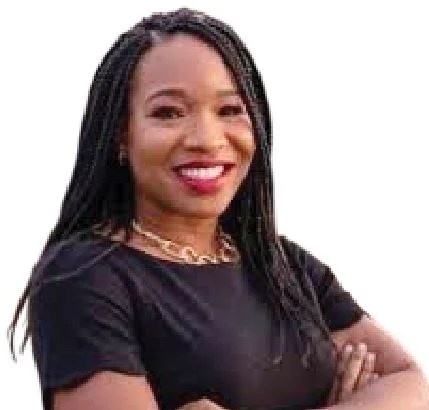
What was growing up like for you?
I was born in Nigeria, but we left when I was quite young, at age 3. We relocated to Canada. Leaving Nigeria was inspired by my parents, who were looking for different opportunities to raise their kids.
At the time, I think they felt the political situation in Nigeria was very challenging, and they wanted to seek an opportunity for their children to have different paths in life. So, that’s what really inspired the move at that time.
How would you describe growing up as a kid in Canada?
Well, after we moved to Canada, we faced a lot of immigration hurdles. Due to that, we moved and stayed in the United Kingdom. Then we moved to Jamaica for a few years, before we moved back to Canada. So, we migrated to Canada the second time when I was around eight years old. That time, growing up in Canada was really challenging because my parents were not together.
My dad was still in Nigeria because of the same immigration issues. My mum was with us, the children. We grew up in an area where it was hard to make ends meet. My parents both had thriving careers in Nigeria.
They both had to retrain all of them in order to work. So, we grew up in challenging conditions, but I think the resilience of my parents in doing everything that they could to make sure that we did well had a great effect on me positively.
What kind of sacrifices did your mum make at the time your dad had immigration challenges?
I’m a mum now, and I can’t imagine how very hard it was for her to be in a completely new place, raising little kids by herself, and starting life from scratch. This was not a time when you could easily call home. It was not like now, when you can just call somebody on WhatsApp and do FaceTime.
This was the time when, in order to make a phone call, you would buy phone cards and schedule the time that you would talk to somebody. Sometimes you would send letters. For us as kids, it can feel like an adventure, but I know that for my mum, it was quite challenging to just pick up and build a brand new community in a new place by herself.
Then, despite having the support of my dad, he was not physically there. That was in the early 90s, so there wasn’t technology for us to be connected like it is now. Then, my mum would do many jobs. At one point, she was working three or four different jobs, ensuring we were okay.
Meanwhile, she was also going to school in Canada, and that was not easy at all. She did an incredible job of building community so that we never felt like we were alone, and making sure that she spent quality time with us despite working so hard all the time.
How did you feel as a child when your dad eventually reunited with his family?
I was almost a teenager at that time, so I was certainly excited to see my dad. My dad is one of my favorite people in the entire world. As the eldest child, growing up was a bit of a routine where my mother and I were in a partnership in running the house. I was used to having a lot of responsibility all the time.
So, I was excited when my dad finally came, and it was a major milestone in my life. It was also a big adjustment to having a new person and a new authority. As a pre-teen, his arrival was a big shift. But overall, when my dad came, he just immediately stepped into the role that I think he had been waiting to do his entire life, caring for us. So, I watched him make a lot of sacrifices so that he could do anything that he could to be with us as much time as he could.
Did he or your mum influence your medical career as a choice?
Being a doctor or studying medicine wasn’t really on my radar growing up. My parents were credible in that they didn’t pressure any of us to do any specific job. I definitely had a lot of friends from other Nigerian families growing up who could do only these few jobs, but that didn’t happen in my house.
As kids, we played sports, drama, and arts, and I spent quite a huge part of my life doing that when I was growing up. I worked with theatre troupes, performing in different places in the country. I was also good at speech and debate. So, I used to picture myself doing law or poetry.
How did the shift happen?
The shift to studying medicine probably didn’t fully occur until my second year at the university. I always loved the sciences. So, I kept doing science classes throughout. I changed my mind along the line, even knowing it would be hard to catch up on sciences. But I just love the arts. So, I ended up doing my major in Biology and English, because I still love the artistic side of things, and still do.
I considered a lot of passions, and particularly my passion for social justice, which developed from childhood and into my adulthood. As I grew up with educated parents, and in a neighbourhood that had experienced a lot of poverty, I picked interest in helping people.
How did the environment you grew up in look like in Canada?
My neighbourhood had folks prone to joining gangs or not finishing school. It was an area with socio-economic scarcity and a high density of immigrants and indigenous people. It was quite challenging to see folks in a system that was supposed to be equitable and equal, but was not. I watched the outcomes for different people based on the levels or the colour of their skin.
I saw that I lived that life. As I entered into my young adulthood, I considered the type of impact I wanted to have in the world, because I was always successful academically. So, I wasn’t worried about my academic success. But I looked at what professions that I could potentially enter that had the possibility of making an impact for my community, and making an impact on these issues of equity and social justice that I saw all the time.
That’s a big part of what medicine as a career came in, which I think was always a part of my personality and life. I just love to care for people and take care of kids. I worked and volunteered in my community a lot, particularly with kids who were coming from backgrounds like mine. I wanted to be able to keep doing what society recognises as important.
So, as I thought about those things, I came to the conclusion that medicine would be good to pursue. Also, it is a way in which society has placed value on our doctors, and so I think the combination of all those things led me to pursuing medicine.
Having studied medicine, why do you specialise in paediatrics?
When I started medical school, I wanted to be a paediatrician. I loved working with kids. I spent time working with children and youths within my church and my community. I ran programmes for children and youths. I thought my instinct was that I wanted to be a paediatrician, not a surgeon. I thought surgeons didn’t have compassion.
The stereotype idea about them that I had was that they didn’t spend time with patients or had sympathy. However, through my medical school journey, I discovered surgery, and I loved it, and it became clear as I spent time on my surgery rotations that that was what I wanted to do with my life. I looked for ways to these other passions that I had with equity and social justice.
What was the highlight of your career while treating children as a paediatric surgeon?
It is hard to pick a particular one in my career because there are so many patients, kids, and families that have made a huge impact on me. They have changed the way I see the world. I think it’s more of an amalgamation of the various impacts on patients rather than being able to pick one or two stories.
I meet with kids who are ill and have unusual things like congenital anomalies. But coming to work on them with a team can be exciting. There are kids I literally met the moment they were born, and I get Christmas cards or first day in preschool cards from them when they visit me in my clinic. Those moments could be exciting to me because it gives joy to be a part of their growth.
What stood out about you as one of the 100 most powerful women in Canada in 2025?
When I embarked on the journey of becoming a pediatrician, which I learnt later on in my training after I had already started my fellowship in pediatric surgery, I think what I’ve learnt is that the work I do speaks for itself. My daily life is not about being the first of anything or being among the top 100 women. Rather, it is about providing excellent patient care and doing research that hopefully is impactful on people and communities.
My work creates an impact on how we care for patients and surgical patients in Canada and around the world. I guess those accolades speak to the work I’ve done. I don’t need any recognition to do my work, but those things are just a nice acknowledgement.
How do you combine your paediatric work with a lecturing job?
I have an incredible supportive husband without whom I wouldn’t be able to accomplish the things that I have. He is an incredibly talented and highly recognised lawyer. I think that we balance each other well. We are supporting each other to achieve as much as we can.
Also, our Christian faith grounds us in all the things that we do. More so, we rely on a lot of support from people to help us get through the day. All these make me strong to go to classes and make an impact in the university community.
What kind of legacy do you want to leave behind?
The legacy I want to leave behind is to see barriers removed for health professions for immigrants. I would hope that a part of my legacy and the work that I do is making health more accessible for people in the future. I want barriers brought down.
I hope that I make it easier for people who follow in my footsteps. I also hope that with the work I do in my research, I can make a difference in each aspect, taking care of our medical systems, and that we can work towards creating a more equitable future for surgical patients and all patients in Canada, North America, and all over the world.
Read the full article here


