






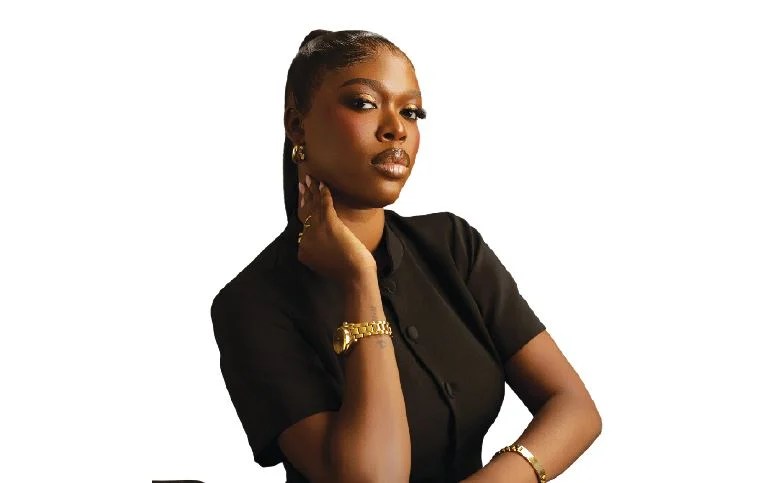
A writer and social media personality, Yetunde Ogundiya, aka Divayetty, has 363, 000 followers on Instagram. She talks to OGHENOVO EGODO-MICHAEL about her career and lifestyle
At what stage of your life did you first realise that writing was something you deeply connected with?
I don’t think writing was something I suddenly discovered at an exact point in my life. It was something that naturally grew out of me. I have always had a strong connection to words and expressions. Even as a university student, my favourite part of examinations was always the theory sections because it gave me room to explain, express, and write extensively. So for me, writing was not a sudden revelation. It was something that quietly followed me through different stages of my life until I finally realised it has always been a part of me.
When did writing move from being a passion to a career path you intentionally chose?
That shift happened in 2022 during my NYSC year. Before then, writing was something I just did, but during that period, I started paying more attention to it. I realised it was something I could build on intentionally. I saw that if I committed myself to it, improved my skills, and stayed consistent, it could become more than just a passion. It could become my work, my platform, and my voice. That was when I started treating writing with more seriousness and structure.
Who were the writers or creative figures that influenced you during your formative years?
I have always admired Chimamanda Ngozi-Adichie. I love the way she tells stories and captures emotions with honesty and depth. I also generally admire Nigerian authors because our storytelling culture is very rich and emotionally layered. However, because I work more within content writing and emotional storytelling online, there were not many people I could directly model my path after. At the time I started, I did not really know many people doing the exact style of writing I was doing online.
That said, I also admired creators like Phoenix Black and a few others whose work showed emotional honesty and relatability.
Which of your early stories brought you public attention and how did that moment change your journey?
One of the earliest stories that really brought me public attention was a funny and relatable story. I wrote about having a conversation in an Uber with a friend. It was about that awkward moment where you suddenly become aware that another person, the driver, is also present and listening in on the conversation while you and your friend are talking. It was a very simple and relatable observation, and people connected with it immediately. A lot of people started saying, “Oh my God, I do this too,” or “I thought I was the only one.”
How do you interpret the love and loyalty from your growing fan base, and how do you engage them beyond digital spaces?
I do not take it for granted at all. Most of what I have built started online, so seeing people connect deeply with my work means a lot to me. But beyond social media numbers, I see it as genuine human connection. These are people who see themselves in my words and trust me enough to stay connected to my work. That is one reason events like my live experience and book launch are important to me. I want to move beyond digital interaction and create physical spaces where people can connect, feel seen, and experience community in real life.
In what ways did your upbringing influence your voice and perspective as a storyteller?
My upbringing had a huge influence on my storytelling voice. Growing up in Nigeria means growing up around storytelling naturally. Nigerians communicate with humour, sarcasm, proverbs, exaggeration, and emotional expression. I also grew up with my nuclear and extended family in the same environment, so I grew up watching family dynamics, observing people closely, and listening to stories everywhere. I think all of that shaped how I communicate today. It also contributed to my love for analogies. One of my favourite writing styles is using familiar experiences and comparisons to explain emotional realities in a way people instantly understand.
What steps define your creative process when you are developing a new piece?
Research is a major part of my process. A lot of people think writing is simply sitting down and typing, but there is actually a lot of thinking and observation involved. Sometimes, I may personally relate to only a few parts of a topic, but if I need to write deeply and comprehensively about it, I have to go beyond myself. I observe conversations, study people’s experiences, and gather emotional patterns. For me, writing is not just self-expression. It is also emotional research and understanding people deeply
Your book ‘No One Warned You About This Part’ has resonated with many readers. What moment during its creation stands out most for you?
One moment that stands out deeply for me was while writing the chapter, ‘You Are Not a Failure, You Are Still Growing’. There is a line in that chapter about not stopping, and while writing it, I suddenly became very emotional because I realised I was also speaking to myself.
At that moment, I reflected on how far I had come, from being a corper struggling to figure life out during NYSC to becoming someone confidently telling stories that resonate with thousands of women worldwide. It was a very introspective and emotional moment for me.
What determines the themes you choose to explore in your writing?
I am usually drawn to conversations women quietly carry but rarely openly discuss. I pay attention to emotional experiences people often feel ashamed, lonely, or afraid to talk about publicly. For example, topics like not feeling seen as a child, eldest daughter exhaustion, loneliness, emotional burnout, grief, or identity struggles. These are not always conversations people casually sit down and have with friends. Sometimes, they are conversations people only admit in therapy or private moments.
So, my goal with writing is to help people feel less alone in those experiences.
Which project has tested you the most creatively and what made it demanding?
My book tested me the most creatively because writing a book requires emotional consistency, vulnerability, structure, and discipline over a long period.
Unlike social media writing where you can express one idea at a time, a book demands that you sustain emotional honesty across multiple chapters while still keeping readers engaged.
It required me to revisit painful memories, reflect deeply, and articulate emotions carefully in a way that would resonate with readers.
How were you able to build a massive social media following within a relatively short period, and what strategies proved most effective for you?
I would not even call it a short period because I have been doing this consistently for years. If there is one thing that helped me grow, it is consistency. I know that word sounds cliché now, but it is genuinely true. I kept writing, showing up, improving, and paying attention to what connected emotionally with people. Over time, people began trusting my voice because they knew I was consistently present and authentic.
Can you recall a moment when rejection or criticism reshaped your approach to writing?
One thing about me is that I bounce back very quickly. I do not internalise rejection deeply. If criticism is constructive and genuinely helpful, I take time to reflect on it and improve where necessary. But if it is not useful, I simply move on.
I think protecting your confidence is very important as a creative person because if you absorb every negative opinion emotionally, it becomes difficult to continue creating freely.
How do you stay true to your voice while meeting the expectations of different audiences?
This can be tricky sometimes. Recently, I have noticed more male audiences connecting with my content and saying, “Write for us too.”
But, I always remind myself of why I started and who my core audience is. My work has always centered on women, especially those navigating identity, growth, emotional burdens, and becoming.
So while anyone can connect with my work, I still remain intentional about writing primarily from and for women’s experiences.
What is one common misconception people have about content writing?
A lot of people think content writing is easy and does not require deep thinking. But writing is actually a lot of mental work. It requires observation, emotional intelligence, structure, timing, creativity, research, and communication skills.
People often only see the final post without understanding the amount of thought behind making something emotionally resonant and relatable.
How do you spend your time when you are not writing?
I watch movies a lot. I am a huge movie series lover. Ironically, I probably watch more movies than I read books. I enjoy storytelling in all forms, and films inspire me emotionally and creatively too.
How would you describe yourself beyond the work people see online?
I am actually a very shy person in real life, which surprises a lot of people.
People often assume I am extremely outgoing because of how expressive my writing is, but I am naturally reserved. I am also very playful and funny around people I am comfortable with. My friends always say I am funnier than people expect.
Tell us about your educational background.
I attended St. Catherine Mary Primary School in Lagos for my elementary education. After that, I attended Command Secondary School for my secondary education. I later studied Linguistics and Communication Studies at Osun State University. I am currently pursuing my master’s degree.
Read the full article here


