






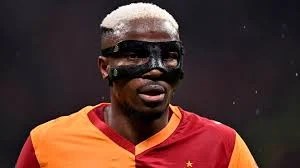
Super Eagles striker Victor Osimhen has urged his teammates and the Nigerian public to keep moving forward despite the disappointment of missing out on the 2026 FIFA World Cup, admitting that the absence has been difficult to come to terms with after Nigeria failed to reach the global showpiece for a second successive time.
Speaking during a recent social media stream, the Galatasaray forward broke his silence on the issue, reflecting on a qualifying campaign that promised much but ultimately ended in heartbreak for the Super Eagles.
“It’s bad, not just for me but for the rest of the guys. We’ve missed out twice in a row. Sometimes life happens, so we just have to keep moving,” Osimhen said.
The 2026 edition of the tournament, which kicked off last week, is historic in its own right, marking the first time the World Cup has expanded to 48 teams and making it the most lucrative edition to date for all participating nations.
Africa was handed nine automatic qualifying slots and an additional spot in the intercontinental playoffs, yet Nigeria still could not find a way through, finishing second in their qualifying group before being eliminated by the Democratic Republic of Congo in the continental playoffs.
The setback condemned the Super Eagles to a second consecutive absence from the World Cup, with their last appearance at the tournament coming back in 2018. For players such as Osimhen, who have come through the ranks without ever experiencing the competition, the disappointment carries an added sting, particularly given the calibre of talent currently available to Nigeria.
The squad boasts world-class names including Alex Iwobi, Calvin Bassey, Wilfred Ndidi and Ademola Lookman, underlining the gulf between the quality on paper and the team’s results on the pitch during qualification.
Much of Nigeria’s struggles have been attributed to administrative instability rather than a lack of footballing quality.
Three different coaches oversaw various stages of the qualifying campaign, a situation widely blamed on inefficiency within the Nigeria Football Federation and one that disrupted continuity at a crucial period.
There are, however, genuine signs of progress under current coach Eric Chelle, who has given the team a clearer tactical identity and a renewed sense of purpose since taking charge.
Although a number of Nigeria’s key players will be in their 30s by the time the next World Cup arrives, the experience gathered by this current generation, allied to Chelle’s growing influence on the team’s approach, has fuelled cautious optimism that the Super Eagles can end their wait for a return to football’s biggest stage when qualification for the next edition begins.
Read the full article here


