






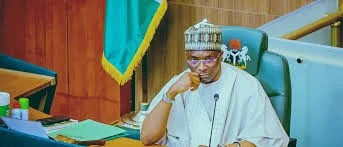
The Deputy Speaker of the House of Representatives, Benjamin Kalu, has called for a major shift in Nigeria’s security strategy, urging the country to develop its local arms manufacturing capacity and reduce dependence on imported weapons.
Kalu also charged financial institutions to strengthen measures against money laundering, terrorism financing and other illicit financial flows that sustain criminal networks across the country.
Speaking at the Nigeria People’s Strategic Conference and Defence Exhibition 2026 in Abuja on Saturday, the Deputy Speaker said Nigeria’s security challenges require a coordinated national response involving government institutions, the private sector, technology companies, civil society groups and the financial industry.
The conference, themed “Building a Modern Security Ecosystem: Integrating Private Sector Capacity into Nigeria’s National Security Architecture,” brought together stakeholders from the defence industry, financial institutions, civil society organisations and security agencies.
Against the backdrop of persistent security threats ranging from terrorism and banditry to kidnapping and organised crime, Kalu said Nigeria must build a self-sustaining defence ecosystem capable of meeting the country’s security needs while creating jobs and reducing strategic vulnerabilities.
According to him, continued reliance on foreign arms suppliers exposes the country to avoidable risks and limits its capacity to respond effectively to emerging security threats.
A statement issued by the Chief Press Secretary to the Deputy Speaker, Levinus Nwabugiogwu, on Sunday, quoted Kalu saying, “Every sector represented in this room must leave with a specific, measurable role in Nigeria’s security architecture. The defence industry must deepen local capacity so that we do not import what we can produce.
“The technology sector must offer platforms for intelligence sharing and community early warning. The financial sector must tighten the chokepoints through which criminal and terrorist financing flows. The civil society must continue to build the bridges between communities and the government that make sustainable peace possible.
“At the legislature, we will continue to provide the legal scaffolding on which all of this is built. We will continue to review the constitution where it needs reviewing. We will appropriate resources where resources are needed. We will provide oversight to ensure that what is promised is delivered. We will legislate not for public applause but for the protection of lives and the dignity of every Nigerian.”
Kalu said the National Assembly was already taking concrete steps to strengthen the country’s security architecture, citing the House of Representatives’ recent vote in support of the State Police constitutional amendment.
The proposal, which has generated intense national debate over the years, is seen by proponents as a critical step towards decentralising policing and improving local security responses.
“I am proud to serve in an assembly that just two days ago voted 289 to 2 in favour of a safer Nigeria. That near-unanimity was not partisan. It was patriotic. And it must be matched by an equal unity of purpose in this room today.
“There is a Nigeria on the other side of this season. That Nigeria is not a promise. It is a project. A project that belongs to all of us; both the legislature and the executive, the uniform and the suit, the community and the corporation, the government and the governed.
“We are a people worth fighting for. This republic is worth building. And let this moment be the moment we decide, formally and finally, to build it together,” he said.
The Deputy Speaker also rejected suggestions that Nigeria was on a path of failure, arguing that despite mounting security and economic challenges, the country has continued to demonstrate resilience.
“Nigeria is not failing. Nigeria is fighting. There is a difference. A failing country stops trying. Nigeria has never stopped trying. That is our heritage. That is our irreducible character. But resilience must be met by structure. Courage must be met by policy. The sacrifice of the Nigerian people deserves a security ecosystem worthy of the sacrifice,” he said.
Kalu’s remarks come at a time when the Federal Government is seeking new approaches to address insecurity, amid growing calls for greater collaboration between security agencies, local communities and the private sector.
The Deputy Speaker maintained that building a modern security ecosystem would require clearly defined responsibilities across sectors, stronger institutions, and sustained political commitment to reforms aimed at safeguarding lives and property across the country.
Read the full article here


